
The October edition of WorkLife Business News is live! Read the full edition here!
← News

What Australian employees want in 2027, and who’s being left behind

Man holding australia flag with sunset

Australia has long sold itself as the lucky country. Sunshine, balance and a job you can leave at the door are all part of the national brand. For employers, that reputation is a real advantage when it comes to attracting talent.

In recent years, however, the workplace picture has been more mixed. Cost-of-living pressure, burnout and the debate over where people work have all weighed on employees.

This year, things are looking up. WorkL’s 2026 data shows a recovery across every core measure of the Australian workplace. Employee engagement in Australia has climbed two percentage points to 73%. At the same time, the share of people thinking about leaving (Flight Risk) has fallen from 25% to 22%.

Even so, the recovery isn’t reaching everyone at the same speed. In this article, we share the headlines. The full findings, including what employees want in 2027, are in our free 2026 Australia report.

Employee engagement in Australia is recovering

WorkL’s 2026 data shows a recovery across every core measure of the Australian workplace. Employee engagement in Australia has climbed two points to 73%. At the same time, the share of people thinking about leaving has fallen from 25% to 22%.

The gains across the WorkL Six Steps to Workplace Happiness are broad, too. Wellbeing, instilling pride, information sharing and job satisfaction each rose three points. Empowerment and reward and recognition each rose two percentage points.

Measure 2026 Change
Employee engagement 73% +2 pts
Flight risk 22% −3 pts
Empowerment 75% +2 pts
Job satisfaction 74% +3 pts
Instilling pride 73% +3 pts
Information sharing 73% +3 pts
Wellbeing 72% +3 pts
Reward and recognition 72% +2 pts

Source: WorkL Australia data, 2026. Change compared with 2025. For flight risk, a fall is good news.

So why does this matter? When fewer people look elsewhere, companies keep their experience and spend less time rehiring. As a result, teams get the stability to do their best work.

The rise in pride is especially encouraging. People who are proud of their workplace tend to speak well of it to friends and on social media. In a tight market for skilled staff, that word of mouth is valuable.

Yet the national numbers only tell part of the story. Look a little deeper, and a different picture appears.

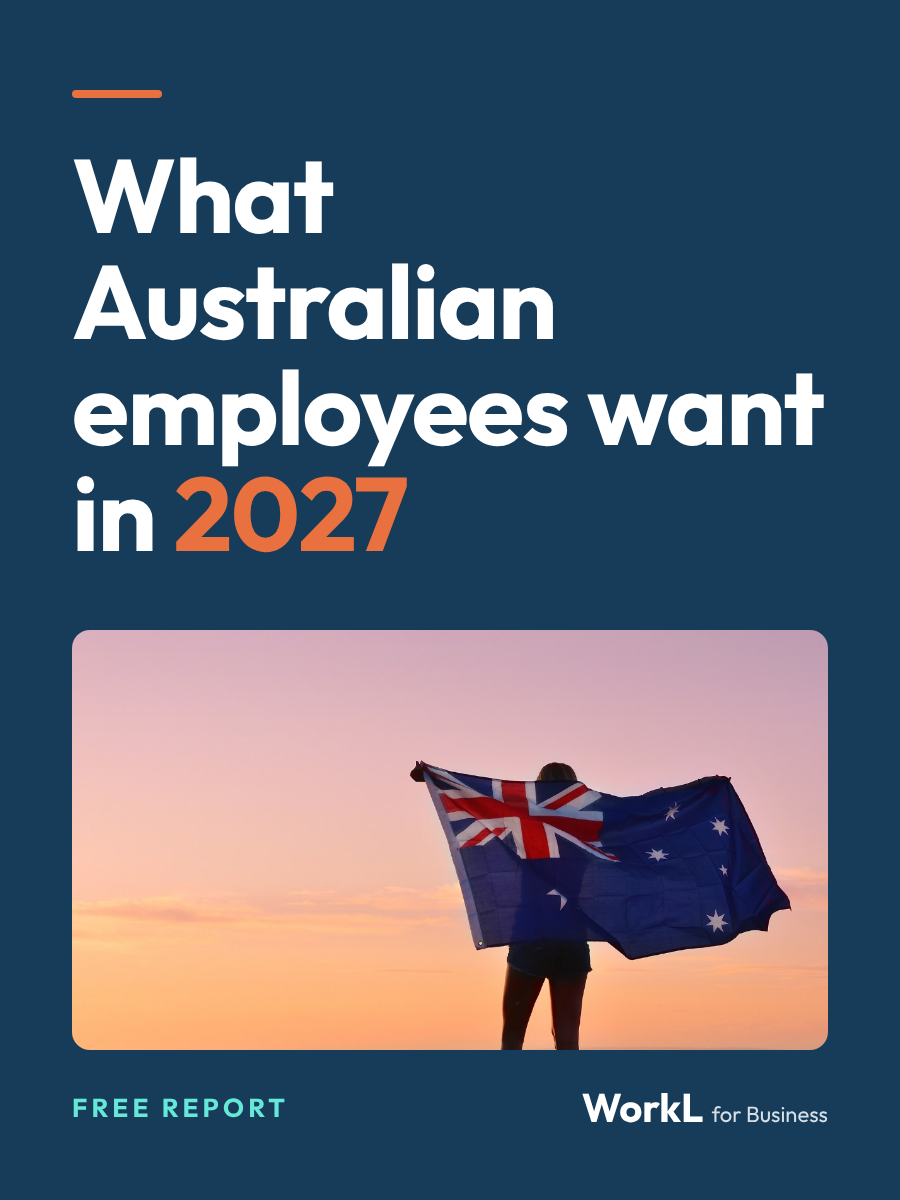
Cover of the WorkL report: What Australian employees want in 2027

Free report

The 2026 Australia Employee Engagement report.

✓The full manager vs non-manager data
✓The four gaps holding Australian workplaces back, and how to close them
✓Three practical steps for HR leaders to take into 2027
Read the full report →

When we split the 2026 data by role, managers and non-managers could almost work for different companies.

Managers score 79% on employee engagement, while everyone else scores 69%. The gap is similar across other measures, too. Non-managers feel less empowered (70% vs 80%) and less informed (68% vs 79%).

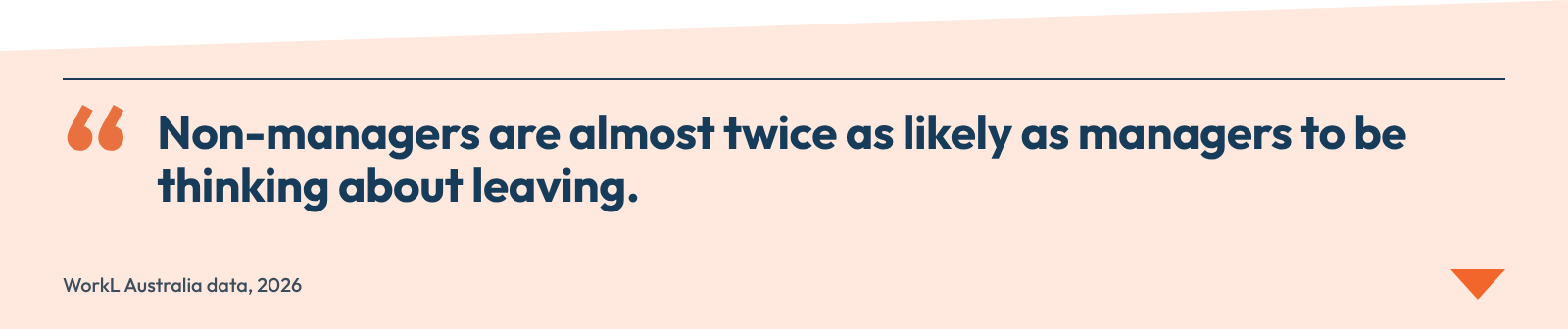
Most importantly, the gap shows up in who wants to leave. In fact, 29% of non-managers are thinking about leaving. That’s almost twice the rate of managers, at 15%.

69% vs 79%

employee engagement for non-managers vs managers

68% vs 79%

say information is shared well, non-managers vs managers

29% vs 15%

thinking about leaving, non-managers vs managers

Source: WorkL Australia data, 2026.

A blind spot at the top

At first glance, falling flight risk looks like good news. However, fewer Australians are moving jobs at all. According to the ABS, job mobility fell to 7.2% in the year to February 2026.

In other words, many people are staying put without settling in. When the job market picks up, the people who feel least valued will often be the first to go.

What Australian employees want in 2027

Our data points to four clear gaps between managers and everyone else. Each one tells you what non-managers want more of in 2027.

  1. To be kept in the loop
    This is the widest gap in our data. News often reaches frontline teams last, second-hand or not at all.
  2. A say in how they work
    Non-managers often have the least control over their day. Someone else usually decides their rosters, tools and processes.
  3. To feel looked after
    Wellbeing drove much of the national recovery. Even so, it isn’t reaching everyone equally.
  4. To be recognised
    Recognition tends to go to visible work. As a result, frontline effort is easy to overlook.

None of these needs a big budget. Instead, each one needs clear intent from leaders. Our full report sets out the gap for each one, along with practical fixes you can start in January.

Recognising the workplaces getting it right

Australia’s best workplaces have something in common. Their people feel heard at every level, not just in the management team.

These companies deserve recognition, and that’s exactly what The Australian Best Places to Work, powered by WorkL, offers.

Being named one of The Australian’s Best Places to Work gives your culture national recognition. It’s a badge that helps you attract great people in a competitive market. It also gives your leadership team clear proof that your people strategy is working.

Whether you lead a team of 20 or thousands, the end of the year is a natural moment to reflect. How do your people really feel? And is your culture getting the credit it deserves?

Is your workplace one of Australia’s Best?

Find out now →

Get insights like this in your inbox

Free research, data and expert analysis on Australia’s workplaces from WorkL, sent to you every month. Discover what’s driving engagement, how you compare with other organisations, and practical ideas to build a workplace where your people thrive.

More news

All news