This article was originally featured in the February 2026 edition of WorkLife Business News which you can view here!
Written by Sarah Carr, Head of Colleague Insight and Experience and Andrew Hastings, Inclusion Lead at Aberdeen Group.
If someone had told you even a few years ago that a wealth and asset management company would be leading the way on inclusion, you might not have believed them. But at Aberdeen, we’ve been quietly – and sometimes loudly – reshaping what inclusion looks and feels like in our industry. And the truth is: we’re just getting started.
Over the past few years, we’ve learned something important. You don’t build an inclusive workplace simply by setting targets and waiting for the numbers to move. Targets matter – they help set direction, they show intent, and they’ve played an important role in building momentum. But they only ever tell you who is in the room, not how it feels to be in that room.
So, in 2025, we made a bold shift. We moved from relying on representation targets, to creating what we call our Indicators of Inclusion – a more immediate, human, and honest way to understand whether people truly feel they can thrive.
Our goal has always been clear: build a business where people can do the best work of their careers, feel safe to speak up, and deliver brilliant client outcomes. Like many others, targets have helped us improve visibility and accountability, and we’re proud of the progress they drove. We’ve met or exceeded several of our gender and ethnicity ambitions – including board gender, senior leadership gender, and UK senior leadership ethnicity. We’ve narrowed our global gender gap and grown representation in key areas.
But we kept coming back to the same truth: inclusion isn’t a spreadsheet outcome. It’s a daily experience. And if we’re being honest, have we really tackled some of the biggest barriers?
Our Indicators of Inclusion were designed to capture exactly that. They give us earlier signals when something isn’t working, and much clearer insight into where we need to create change. They also help our leaders make decisions that shape the culture – not just the statistics. That will all mean longer-term and sustainable change.
These indicators look at three connected areas:
This approach shifts the conversation from, “How many women are in senior leadership?” to “Do women experience our workplace in a way that helps them build long, rewarding careers here?”
It moves us from counting people to understanding people. And that’s where the real work – and the real progress – happens.
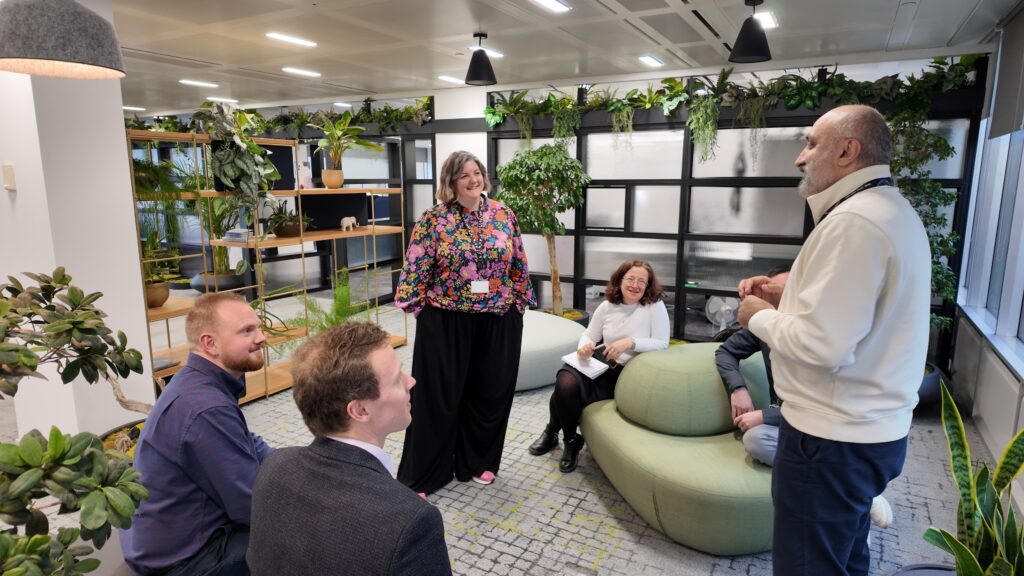
If you want to know who really shapes culture at Aberdeen, look to our colleague-led networks. These aren’t side projects or symbolic groups. They’re energetic, challenging, creative communities that help us understand what the workplace feels like day to day.
They challenge us, stretch our thinking, and keep us honest. These brilliant groups champion and support across gender, accessibility, ethnicity, LGBTQ+ inclusion, sustainability, carers, military communities, neurodiversity and more.
They host conversations that spark change, raise issues we need to take seriously, and help us build solutions that actually land.
We also believe that understanding where the gaps are – and being open about them – is essential to meaningful progress. That’s why we’ve published our UK gender pay gap every year since 2017, and why we expanded this in 2024 to include our UK ethnicity pay gap.
Our results show encouraging movement. Our gender pay gap has narrowed for seven consecutive years. Our ethnicity pay gap is now published annually, giving us a baseline to act on and measure against. These reports aren’t just numbers; they’re catalysts for action.
We’re proud of the progress – but we’re not complacent about the work still to do. Transparency makes us better. It also builds trust with our colleagues and with our clients, who rightly expect to see a firm that holds itself to high standards.
Across our data, and our colleague sentiment, we’re seeing signals that the shift is working.
Psychological safety is growing. Engagement scores have improved. People feel more confident and more connected to our purpose and strategy. Representation continues to improve in many critical areas. And through our Indicators of Inclusion we’re beginning to spot – earlier and more accurately – the places where experiences differ between groups, and act on them faster.
One example: our deep dive into talent flow has helped us understand how progression feels at different points in people’s careers, highlighting where we need to remove friction and where our leaders need better tools.
This is progress that shows up in voices and stories, not just statistics.
If you’re thinking of joining us – or partnering with us – here’s the thing you’ll feel quickly: inclusion isn’t a sideline. It’s a core part of how we run the business. And you can see it in a few important ways:
1. We listen – really listen.
Through networks, our Colleague Council, our senior leaders, pulse surveys, informal conversations and everyday interactions. And when colleagues tell us what’s getting in the way, we act.
2. We’re transparent, even when it’s uncomfortable.
Publishing pay gaps, sharing progress openly, and talking directly about what still needs to improve isn’t just “nice to have”. It’s an essential part of how we lead.
3. We act on insight, not instinct.
Our Indicators of Inclusion give us better data and better stories about how it feels to work here. That helps us make better decisions.
4. We believe culture is built by everyone.
Our networks, councils and communities play a huge part in shaping who we are. They’re not symbolic – they’re strategic.
5. We’re ambitious, and we’re proud of it.
We want to set a standard in financial services. We want inclusivity to be something clients notice, candidates talk about, and colleagues experience every day.
We’re deepening our use of the Indicators of Inclusion, continuing to strengthen action at the moments that matter in people’s careers, and investing further in leadership capability – because leaders shape everyday experience more than anything else.
The shift from targets to indicators won’t just change how we measure progress – it’s changing how we think about it. And it’s helping us build a culture where difference can thrive.
If you’re reading this as a potential future colleague, we’d love you to join us.
If you’re reading this from another organisation, we’re always happy to share what we’re learning – because inclusion isn’t competitive; it’s collective.
And if you’re reading this thinking, “I didn’t expect this from an asset management and financial organisation” – that’s exactly the point. We want to raise the bar for our industry. And above all, we want every single person at Aberdeen to feel that they can belong, grow, and make an impact.
This article was originally featured in the February 2026 edition of WorkLife Business News which you can view here!